Physiognomy and the Meaning of Expression in Nineteenth-Century Culture
Paperback Engels 2006 9780521022422Samenvatting
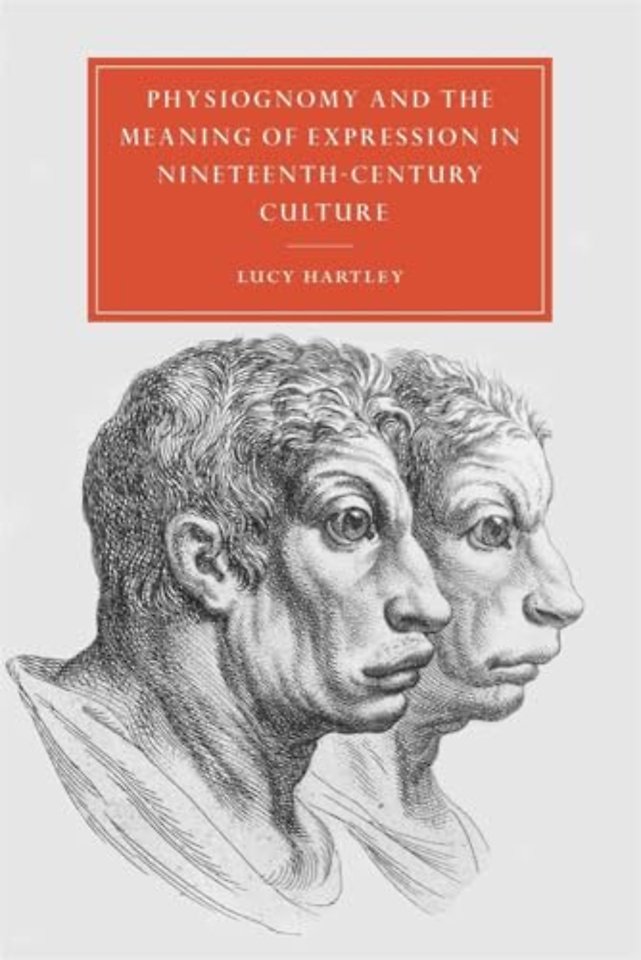
In Physiognomy and the Meaning of Expression in Nineteenth-Century Culture, first published in 2001, Lucy Hartley examines the emergence of physiognomy as a form of popular science. Physiognomy posited an understanding of the inner meaning of human character from observations of physical appearances, usually facial expressions. Taking the physiognomical teachings of Johann Caspar Lavater as a starting-point, Hartley considers the extent to which attempts to read the mind and judge character through expression can provide descriptions of human nature. She argues that the writings of Charles Bell, and the Pre-Raphaelites establish the significance of the physiognomical tradition for the study of expression whilst also preparing the ground for the rise of new doctrines for the expression of emotion by Alexander Bain and Herbert Spencer. She then demonstrates how the evolutionary explanation of expression proposed by Spencer and Charles Darwin is both the outcome of the physiognomical tradition and the reason for its dissolution.
Specificaties
Lezersrecensies
Inhoudsopgave
Rubrieken
- advisering
- algemeen management
- coaching en trainen
- communicatie en media
- economie
- financieel management
- inkoop en logistiek
- internet en social media
- it-management / ict
- juridisch
- leiderschap
- marketing
- mens en maatschappij
- non-profit
- ondernemen
- organisatiekunde
- personal finance
- personeelsmanagement
- persoonlijke effectiviteit
- projectmanagement
- psychologie
- reclame en verkoop
- strategisch management
- verandermanagement
- werk en loopbaan