Defining the Common Good
Empire, Religion and Philosophy in Eighteenth-Century Britain
Gebonden Engels 1994 9780521442596Samenvatting
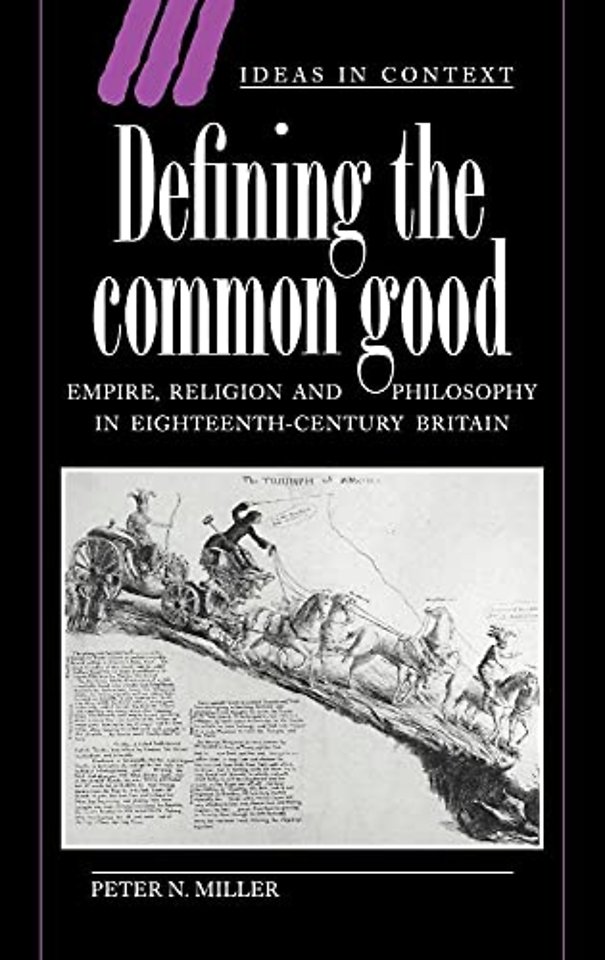
The theme of this book is the crisis of the early modern state in eighteenth-century Britain. The revolt of the North American colonies and the simultaneous demand for wider religious toleration at home challenged the principles of sovereignty and obligation that underpinned arguments about the character of the state. These were expressed in terms of the 'common good', 'necessity', and 'community' - concepts that came to the fore in early modern European political thought and which gave expression to the problem of defining legitimate authority in a period of increasing consciousness of state power. The Americans and their British supporters argued that individuals ought to determine the common good of the community. A new theory of representation and freedom of thought defines the cutting edge of this revolutionary redefinition of the basic relationship between individual and community.
Specificaties
Lezersrecensies
Inhoudsopgave
Rubrieken
- advisering
- algemeen management
- coaching en trainen
- communicatie en media
- economie
- financieel management
- inkoop en logistiek
- internet en social media
- it-management / ict
- juridisch
- leiderschap
- marketing
- mens en maatschappij
- non-profit
- ondernemen
- organisatiekunde
- personal finance
- personeelsmanagement
- persoonlijke effectiviteit
- projectmanagement
- psychologie
- reclame en verkoop
- strategisch management
- verandermanagement
- werk en loopbaan