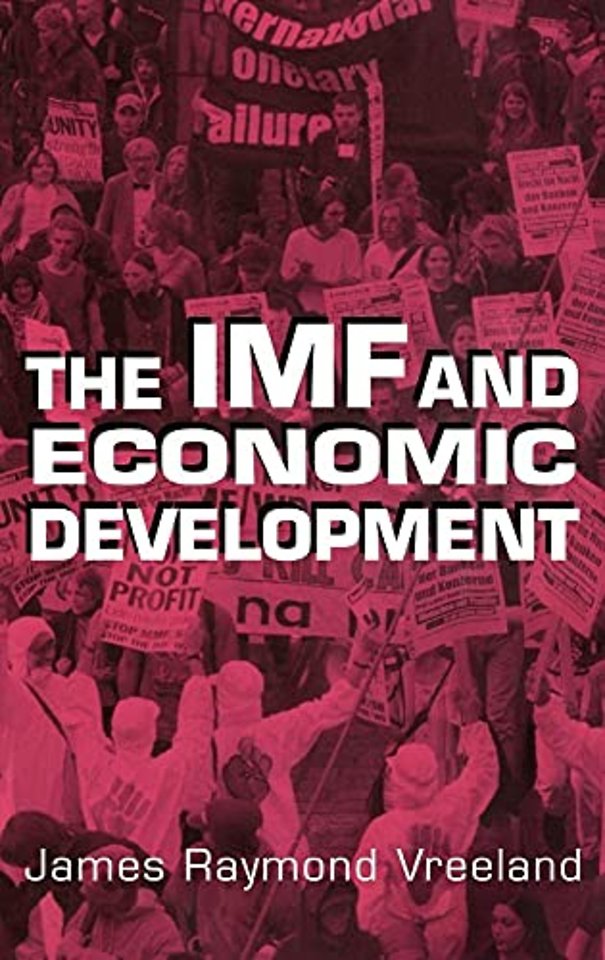
The IMF and Economic Development
Gebonden Engels 2003 9780521816755Samenvatting
Why do governments turn to the International Monetary Fund (IMF) and with what effects? This book argues that governments enter IMF programs for economic and political reasons, and finds that the effects are negative on economic growth and income distribution. By bringing in the IMF, governments gain political leverage - via conditionality - to push through unpopular policies. Note that if governments desiring conditions are more likely to participate, estimating program effects is not straightforward: one must control for the potentially unobserved political determinants of selection. This book addresses the selection problem using a dynamic bivariate version of the Heckman model analyzing cross-national time-series data. The main finding is that the negative effects of IMF programs on economic growth are mitigated for certain constituencies since programs also have distributional consequences. But IMF programs doubly hurt the least well off in society: they lower growth and shift the income distribution upward.
Specificaties
Lezersrecensies
Inhoudsopgave
Rubrieken
- advisering
- algemeen management
- coaching en trainen
- communicatie en media
- economie
- financieel management
- inkoop en logistiek
- internet en social media
- it-management / ict
- juridisch
- leiderschap
- marketing
- mens en maatschappij
- non-profit
- ondernemen
- organisatiekunde
- personal finance
- personeelsmanagement
- persoonlijke effectiviteit
- projectmanagement
- psychologie
- reclame en verkoop
- strategisch management
- verandermanagement
- werk en loopbaan