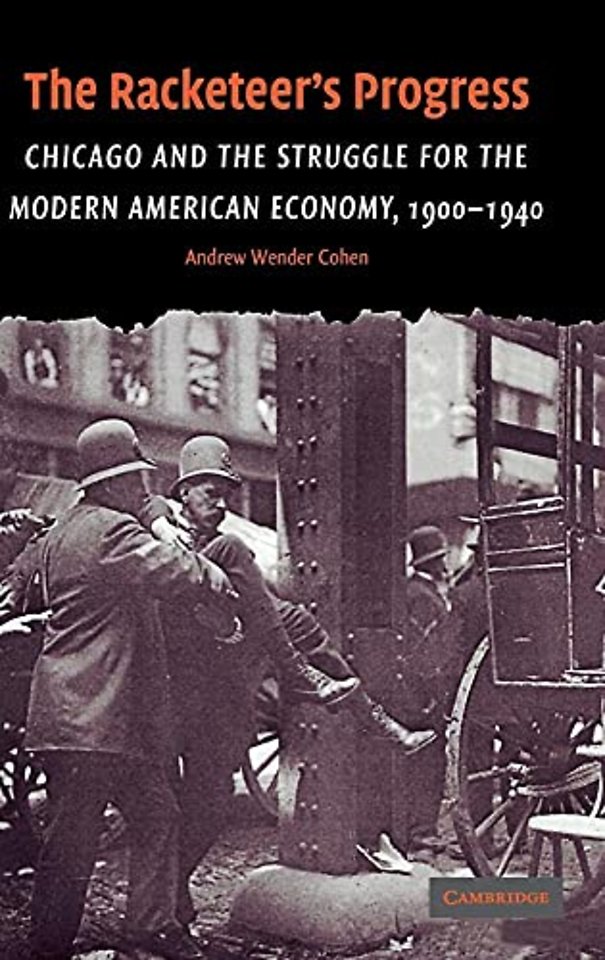
The Racketeer's Progress
Chicago and the Struggle for the Modern American Economy, 1900–1940
Gebonden Engels 2004 9780521834667Samenvatting
The Racketeer's Progress explores the contested and contingent origins of the modern American economy by examining the violent resistance to its development. It explains how carpenters, teamsters, barbers, musicians and others organised to thwart ambitious national corporations. Unions and associations governed commerce through pickets, assaults and bombings. Scholars often ignore this defiance, painting modernisation as a consensual process and presenting craftsmen as reactionary, corrupt and criminal. This is ironic, for the tradesmen's reputation derives from their successful struggle to control modernisation and the emerging consumer economy. Their resistance redirected American law. Progressive-era courts rebuked the craftsmen for attempting to govern trade. In the 1920s, the tradesmen inspired new criminal concepts, such as 'racketeering'. But the Great Depression reversed harsh laws. The craftsmen became a model for New Deal recovery statutes and a focus for constitutional debates. Meanwhile, the state began protecting unions against gangsters like Al Capone.
Specificaties
Lezersrecensies
Inhoudsopgave
Rubrieken
- advisering
- algemeen management
- coaching en trainen
- communicatie en media
- economie
- financieel management
- inkoop en logistiek
- internet en social media
- it-management / ict
- juridisch
- leiderschap
- marketing
- mens en maatschappij
- non-profit
- ondernemen
- organisatiekunde
- personal finance
- personeelsmanagement
- persoonlijke effectiviteit
- projectmanagement
- psychologie
- reclame en verkoop
- strategisch management
- verandermanagement
- werk en loopbaan