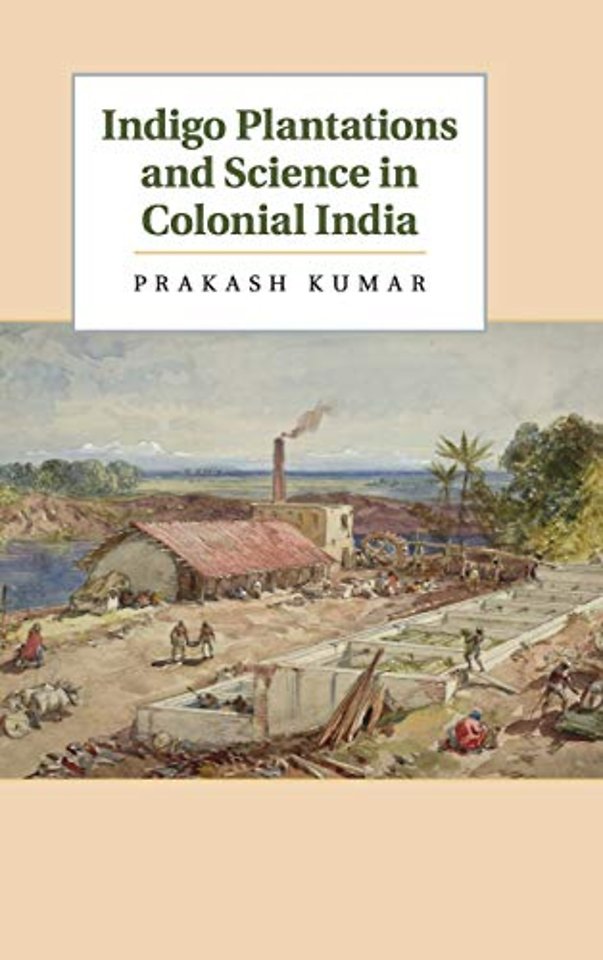
Indigo Plantations and Science in Colonial India
Gebonden Engels 2012 9781107023253Samenvatting
Prakash Kumar documents the history of agricultural indigo, exploring the effects of nineteenth-century globalisation on this colonial industry. Charting the indigo culture from the early modern period to the twentieth century, Kumar discusses how knowledge of indigo culture thrived among peasant traditions on the Indian subcontinent in the early modern period and was then developed by Caribbean planters and French naturalists who codified this knowledge into widely disseminated texts. European planters who settled in Bengal with the establishment of British rule in the late eighteenth century drew on this information. From the nineteenth century, indigo culture became more modern, science-based and expert driven, and with the advent of a cheaper, purer synthetic indigo in 1897, indigo science crossed paths with the colonial state's effort to develop a science for agricultural development. Only at the end of the First World War, when the industrial use of synthetic indigo for textile dyeing and printing became almost universal, did the indigo industry's optimism fade away.
Specificaties
Lezersrecensies
Inhoudsopgave
Rubrieken
- advisering
- algemeen management
- coaching en trainen
- communicatie en media
- economie
- financieel management
- inkoop en logistiek
- internet en social media
- it-management / ict
- juridisch
- leiderschap
- marketing
- mens en maatschappij
- non-profit
- ondernemen
- organisatiekunde
- personal finance
- personeelsmanagement
- persoonlijke effectiviteit
- projectmanagement
- psychologie
- reclame en verkoop
- strategisch management
- verandermanagement
- werk en loopbaan