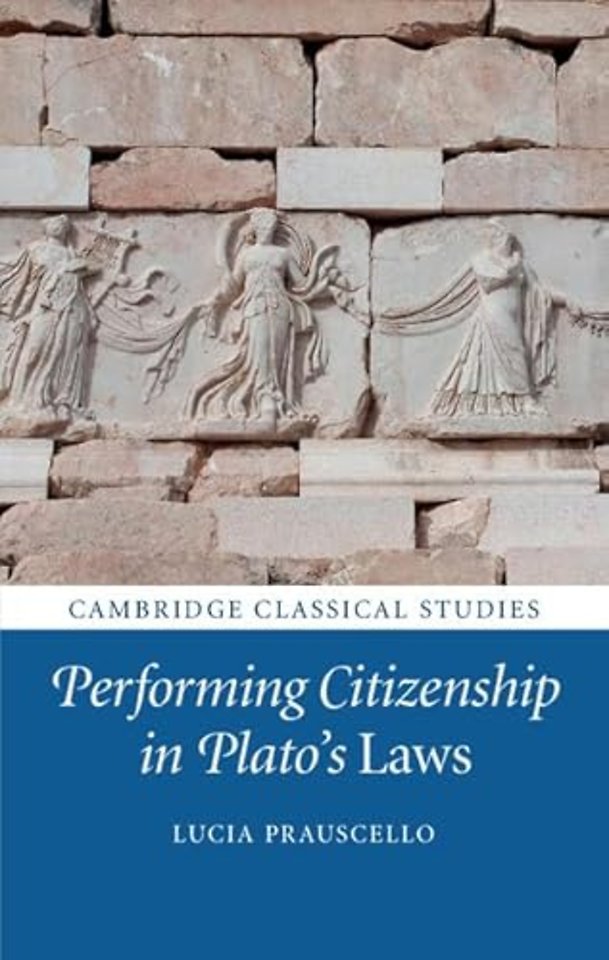
Performing Citizenship in Plato's Laws
Gebonden Engels 2014 9781107072886Samenvatting
In the Laws, Plato theorizes citizenship as simultaneously a political, ethical, and aesthetic practice. His reflection on citizenship finds its roots in a descriptive psychology of human experience, with sentience and, above all, volition seen as the primary targets of a lifelong training in the values of citizenship. In the city of Magnesia described in the Laws erôs for civic virtue is presented as a motivational resource not only within the reach of the 'ordinary' citizen, but also factored by default into its educational system. Supporting a vision of 'perfect citizenship' based on an internalized obedience to the laws, and persuading the entire polity to consent willingly to it, requires an ideology that must be rhetorically all-inclusive. In this city 'ordinary' citizenship itself will be troped as a performative action: Magnesia's choral performances become a fundamental channel for shaping, feeling and communicating a strong sense of civic identity and unity.
Specificaties
Lezersrecensies
Inhoudsopgave
Rubrieken
- advisering
- algemeen management
- coaching en trainen
- communicatie en media
- economie
- financieel management
- inkoop en logistiek
- internet en social media
- it-management / ict
- juridisch
- leiderschap
- marketing
- mens en maatschappij
- non-profit
- ondernemen
- organisatiekunde
- personal finance
- personeelsmanagement
- persoonlijke effectiviteit
- projectmanagement
- psychologie
- reclame en verkoop
- strategisch management
- verandermanagement
- werk en loopbaan