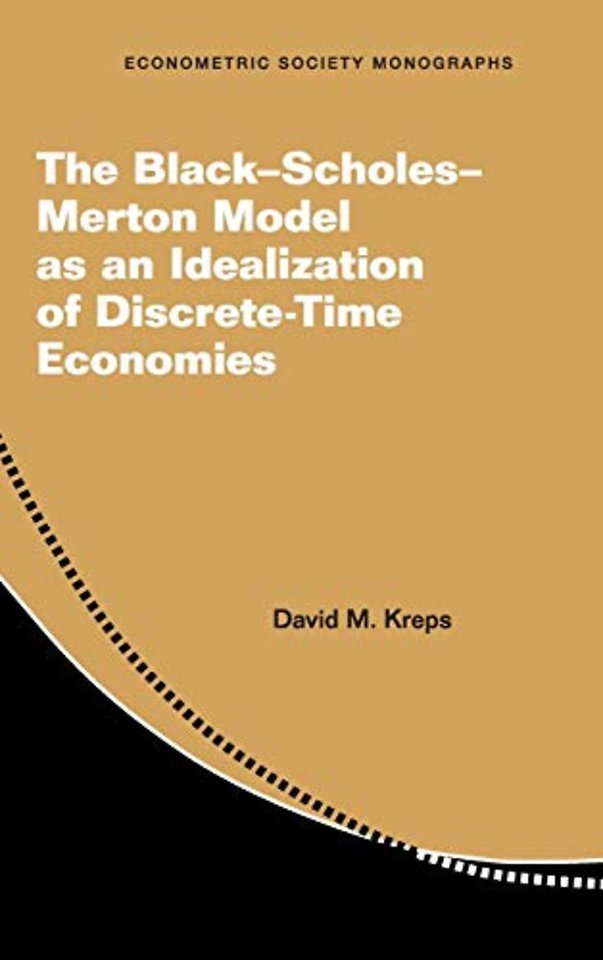
The Black–Scholes–Merton Model as an Idealization of Discrete-Time Economies
Gebonden Engels 2019 9781108486361Samenvatting
This book examines whether continuous-time models in frictionless financial economies can be well approximated by discrete-time models. It specifically looks to answer the question: in what sense and to what extent does the famous Black-Scholes-Merton (BSM) continuous-time model of financial markets idealize more realistic discrete-time models of those markets? While it is well known that the BSM model is an idealization of discrete-time economies where the stock price process is driven by a binomial random walk, it is less known that the BSM model idealizes discrete-time economies whose stock price process is driven by more general random walks. Starting with the basic foundations of discrete-time and continuous-time models, David M. Kreps takes the reader through to this important insight with the goal of lowering the entry barrier for many mainstream financial economists, thus bringing less-technical readers to a better understanding of the connections between BSM and nearby discrete-economies.
Specificaties
Lezersrecensies
Inhoudsopgave
Rubrieken
- advisering
- algemeen management
- coaching en trainen
- communicatie en media
- economie
- financieel management
- inkoop en logistiek
- internet en social media
- it-management / ict
- juridisch
- leiderschap
- marketing
- mens en maatschappij
- non-profit
- ondernemen
- organisatiekunde
- personal finance
- personeelsmanagement
- persoonlijke effectiviteit
- projectmanagement
- psychologie
- reclame en verkoop
- strategisch management
- verandermanagement
- werk en loopbaan