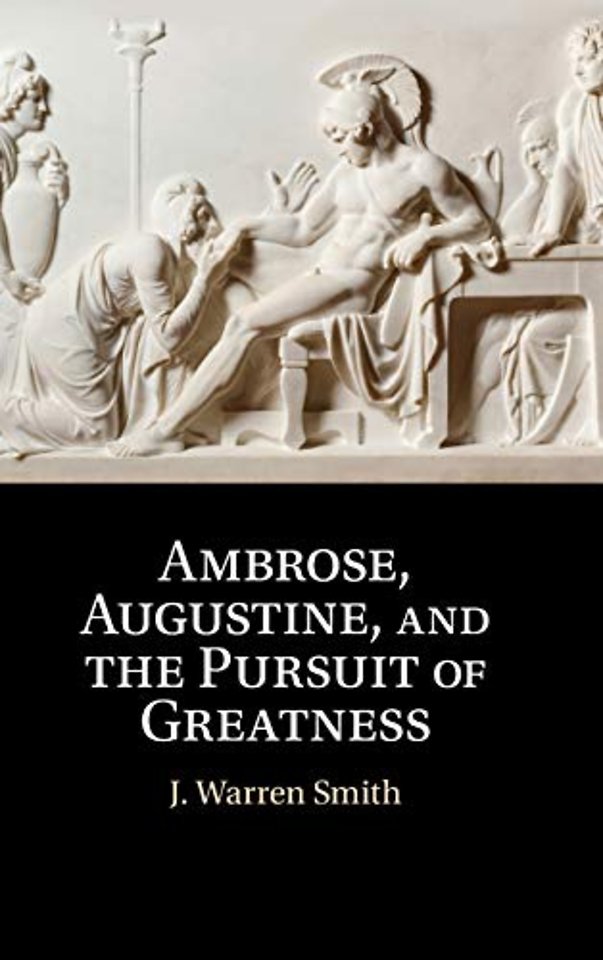
Ambrose, Augustine, and the Pursuit of Greatness
Gebonden Engels 2020 9781108490740Samenvatting
Since Aristotle, the concept of the magnanimous or great-souled man was employed by philosophers of antiquity to describe individuals who attained the highest degree of virtue. Greatness of soul (magnitudo animi or magnanimitas) was part of the language of Classical and Hellenistic virtue theory central to the education of Ambrose and Augustine. Yet as bishops they were conscious of fundamental differences between Christian and pagan visions of virtue. Greatness of soul could not be appropriated whole cloth. Instead, the great-souled man had to be baptized to conform with Christian understandings of righteousness, compassion, and humility. In this book, J. Warren Smith traces the development of the ideal of the great-souled man from Plato and Aristotle to latter adaptions by Cicero, Seneca, and Plutarch. He then examines how Ambrose's and Augustine's theological commitments influenced their different critiques, appropriations, and modifications of the language of magnanimity.
Specificaties
Lezersrecensies
Inhoudsopgave
Rubrieken
- advisering
- algemeen management
- coaching en trainen
- communicatie en media
- economie
- financieel management
- inkoop en logistiek
- internet en social media
- it-management / ict
- juridisch
- leiderschap
- marketing
- mens en maatschappij
- non-profit
- ondernemen
- organisatiekunde
- personal finance
- personeelsmanagement
- persoonlijke effectiviteit
- projectmanagement
- psychologie
- reclame en verkoop
- strategisch management
- verandermanagement
- werk en loopbaan