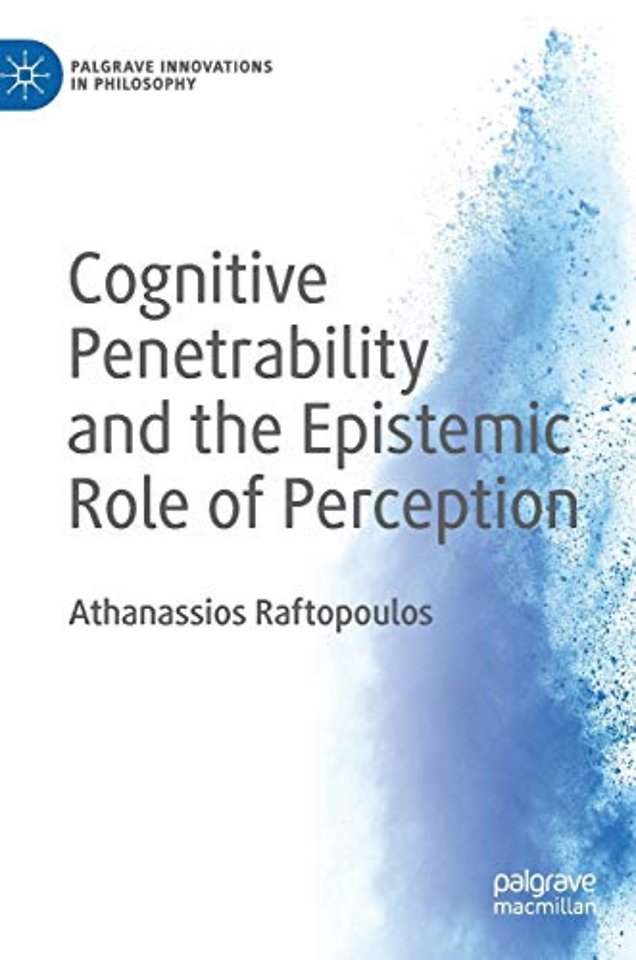
Cognitive Penetrability and the Epistemic Role of Perception
Gebonden Engels 2019 9783030104443Samenvatting
This book is about the interweaving between cognitive penetrability and the epistemic role of the two stages of perception, namely early and late vision, in justifying perceptual beliefs. It examines the impact of the epistemic role of perception in defining cognitive penetrability and the relation between the epistemic role of perceptual stages and the kinds (direct or indirect) of cognitive effects on perceptual processing.
The book presents the argument that early vision is cognitively impenetrable because neither is it affected directly by cognition, nor does cognition affect its epistemic role.
It also argues that late vision, even though it is cognitively penetrated and, thus, affected by concepts, is still a perceptual state that does not involve any discursive inferences and does not belong to the space of reasons. Finally, an account is given as to how cognitive states with symbolic content could affect perceptual states with iconic, analog content, during late vision.
Specificaties
Lezersrecensies
Inhoudsopgave
Rubrieken
- advisering
- algemeen management
- coaching en trainen
- communicatie en media
- economie
- financieel management
- inkoop en logistiek
- internet en social media
- it-management / ict
- juridisch
- leiderschap
- marketing
- mens en maatschappij
- non-profit
- ondernemen
- organisatiekunde
- personal finance
- personeelsmanagement
- persoonlijke effectiviteit
- projectmanagement
- psychologie
- reclame en verkoop
- strategisch management
- verandermanagement
- werk en loopbaan