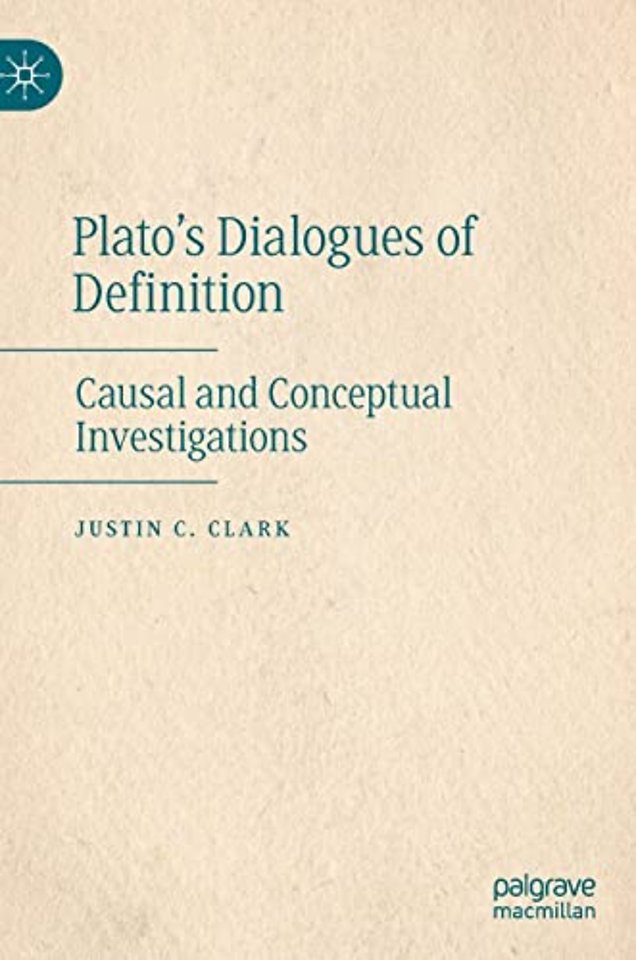
Plato’s Dialogues of Definition
Causal and Conceptual Investigations
Gebonden Engels 2022 9783031078484Samenvatting
In each of Plato’s “dialogues of definition” (Euthyphro, Laches, Meno, Charmides, Lysis, Republic I, Hippias Major), Socrates motivates philosophical discussion by posing a question of the form “What is F-ness?” Yet these dialogues are notorious for coming up empty. Socrates’ interlocutors repeatedly fail to deliver satisfactory answers. Thus, the dialogues of definition are often considered negative— empty of any positive philosophical content. Justin C. Clark resists the negative reading, arguing that the dialogues of definition contain positive “Socratic” answers. In order to see the positive theory, however, one must recognize what Clark calls the "dual function" of the “What is F-ness?” question. Socrates is not looking for a single type of answer. Rather, Socrates is looking for two distinct types of answers. The “What is F-ness?” question serves as a springboard for two types of investigation— conceptual and causal. The key to understanding any of the dialogues of definition, therefore, is to decipher between them. Clark offers a way to do just that, at once resolving interpretive issues in Socratic philosophy, providing systematic interpretations of the negative endings, and generating important new readings of the Charmides and Lysis, whilst casting further doubt on the authenticity of the Hippias Major.
Specificaties
Lezersrecensies
Inhoudsopgave
Rubrieken
- advisering
- algemeen management
- coaching en trainen
- communicatie en media
- economie
- financieel management
- inkoop en logistiek
- internet en social media
- it-management / ict
- juridisch
- leiderschap
- marketing
- mens en maatschappij
- non-profit
- ondernemen
- organisatiekunde
- personal finance
- personeelsmanagement
- persoonlijke effectiviteit
- projectmanagement
- psychologie
- reclame en verkoop
- strategisch management
- verandermanagement
- werk en loopbaan