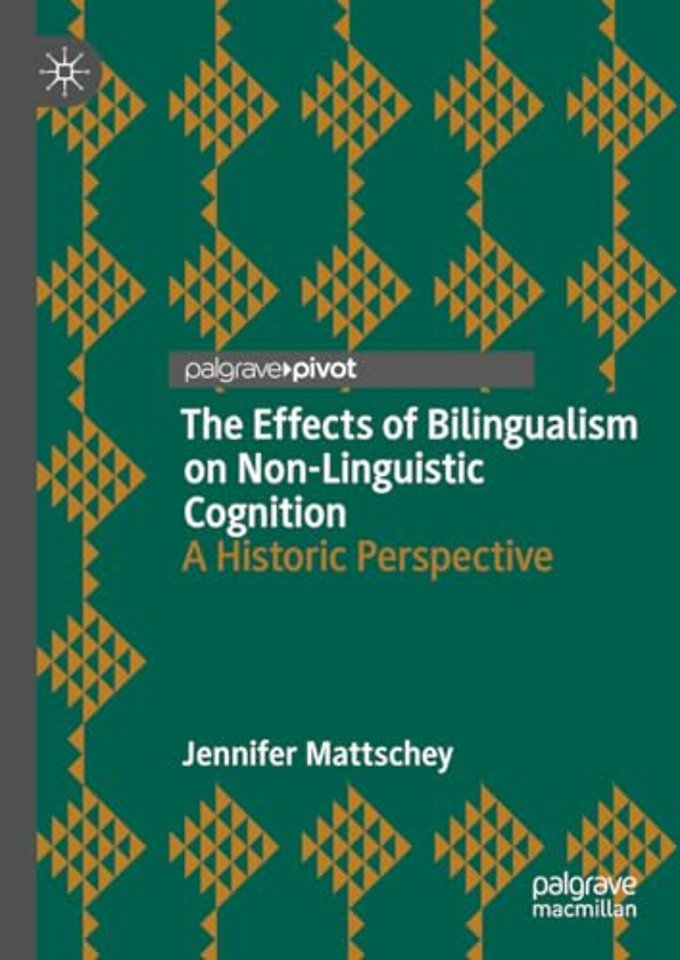
The Effects of Bilingualism on Non-Linguistic Cognition
A Historic Perspective
Gebonden Engels 2023 9783031346804Samenvatting
This book examines a century of research on the relationship between bilingualism and intelligence and relates it to more recent research on bilingualism and executive functioning. In doing so, it highlights how bilingualism research has been understood and used by wider society and its impact on current debates in cognitive science as well as language policy and education.
The book probes the correlation between the fact that while early intelligence research suggested a negative effect of bilingualism on intelligence, the so-called “Bilingual Problem”, later research implied a positive effect, “the Bilingual Advantage.” It questions whether the negative consequences that arose from the Bilingual Problem are influencing researchers’ reluctance to let go of the Bilingual Advantage. Findings on both the bilingual ‘advantage’ and ‘disadvantage’ are shown to have suffered from similar methodological problems, with research into the former finding itself at the centreof the ongoing replication crisis in psychology.
This book provides fresh insights that will be of particular interest to students and scholars of cognitive psychology, psycholinguistics, bilingualism, applied linguistics, education and the history of science.
Specificaties
Lezersrecensies
Inhoudsopgave
Rubrieken
- advisering
- algemeen management
- coaching en trainen
- communicatie en media
- economie
- financieel management
- inkoop en logistiek
- internet en social media
- it-management / ict
- juridisch
- leiderschap
- marketing
- mens en maatschappij
- non-profit
- ondernemen
- organisatiekunde
- personal finance
- personeelsmanagement
- persoonlijke effectiviteit
- projectmanagement
- psychologie
- reclame en verkoop
- strategisch management
- verandermanagement
- werk en loopbaan