, ,

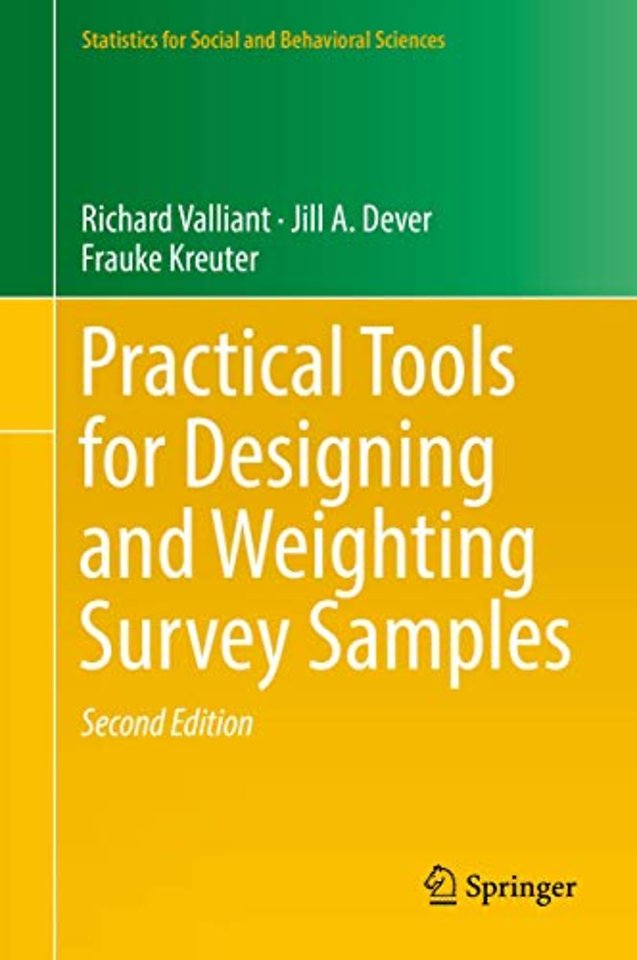
Practical Tools for Designing and Weighting Survey Samples

Gebonden Engels 2018 2e druk 9783319936314
€ 144,99
Levertijd ongeveer 9 werkdagen
Gratis verzonden

Samenvatting

The goal of this book is to put an array of tools at the fingertips of students, practitioners, and researchers by explaining approaches long used by survey statisticians, illustrating how existing software can be used to solve survey problems, and developing some specialized software where needed.  This volume serves at least three audiences: (1) students of applied sampling techniques; 2) practicing survey statisticians applying concepts learned in theoretical or applied sampling courses; and (3) social scientists and other survey practitioners who design, select, and weight survey samples.

The text thoroughly covers fundamental aspects of survey sampling, such as sample size calculation (with examples for both single- and multi-stage sample design) and weight computation, accompanied by software examples to facilitate implementation. Features include step-by-step instructions for calculating survey weights, extensive real-world examples and applications, and representative programming code in R, SAS, and other packages.

Since the publication of the first edition in 2013, there have been important developments in making inferences from nonprobability samples, in address-based sampling (ABS), and in the application of machine learning techniques for survey estimation. New to this revised and expanded edition:

•           Details on new functions in the PracTools package

•           Additional machine learning methods to form weighting classes

•           New coverage of nonlinear optimization algorithms for sample allocation

•           Reflecting effects of multiple weighting steps (nonresponse and calibration) on standard errors

•           A new chapter on nonprobability sampling

•           Additional examples, exercises, and updated references throughout

Richard Valliant, PhD, is Research Professor Emeritus at the Institute for Social Research at the University of Michigan and at the Joint Program in Survey Methodology at the University of Maryland. He is a Fellow of the American Statistical Association, an elected member of the International Statistical Institute, and has been an Associate Editor of the Journal of the American Statistical Association, Journal of Official Statistics, and Survey Methodology.   

Jill A. Dever, PhD, is Senior Research Statistician at RTI International in Washington, DC. She is a Fellow of the American Statistical Association, Associate Editor for Survey Methodology and the Journal of Official Statistics, and an Assistant Research Professor in the Joint Program in Survey Methodology at the University of Maryland. She has served on several panels for the National Academy of Sciences and as a task force member for the American Association of Public Opinion Research’s report on nonprobability sampling.

Frauke Kreuter, PhD, is Professor and Director of the Joint Program in Survey Methodology at the University of Maryland, Professor of Statistics and Methodology at the University of Mannheim, and Head of the Statistical Methods Research Department at the Institute for Employment Research (IAB) in Nürnberg, Germany. She is a Fellow of the American Statistical Association and has been Associate Editor of the Journal of the Royal Statistical Society, Journal of Official Statistics, Sociological Methods and Research, Survey Research Methods, Public Opinion Quarterly, American Sociological Review, and the Stata Journal. She is founder of the International Program for Survey and Data Science and co-founder of the Coleridge Initiative.

Specificaties

ISBN13:9783319936314
Taal:Engels
Bindwijze:gebonden
Uitgever:Springer International Publishing
Druk:2

Lezersrecensies

Wees de eerste die een lezersrecensie schrijft!

Inhoudsopgave

<div>Preface</div><div>Acknowledgements</div><div><br></div><div>1 An Overview of Sample Design and Weighting</div><div>1.1 Background and Terminology</div><div>1.2 Chapter Guide</div><div><br></div><div>Part I Designing Single-Stage Sample Surveys</div><div>2 Project 1: Design a Single-Stage Personnel Survey</div><div>2.1 Specifications for the Study</div><div>2.2 Questions Posed by the Design Team</div><div>2.3 Preliminary Analyses</div><div>2.4 Documentation</div><div>2.5 Next Steps</div><div><br></div><div>3 Sample Design and Sample Size for Single-Stage Surveys&nbsp;</div><div>3.1 Determining a Sample Size for a Single-Stage Design&nbsp;</div><div>3.1.1 Simple Random Sampling</div><div>3.1.2 Stratified Simple Random Sampling</div><div>3.2 Finding Sample Sizes When Sampling with Varying Probabilities&nbsp;</div><div>3.2.1 Probability Proportional to Size Sampling</div><div>3.2.2 Regression Estimates of Totals</div><div>3.3 Other Methods of Sampling</div><div>3.4 Estimating Population Parameters from a Sample</div><div>3.5 Special Topics</div><div>3.5.1 Rare Characteristics</div>3.5.2 Domain Estimates<div>3.6 More Discussion of Design Effects</div><div>3.7 Software for Sample Selection</div><div>3.7.1 R Packages</div><div>3.7.2 SAS PROC SURVEYSELECT</div><div>Exercises</div><div><br></div><div>4 Power Calculations and Sample Size Determination&nbsp;</div><div>4.1 Terminology and One-Sample Tests</div><div>4.2 Power in a One-Sample Test</div><div>4.3 Two-Sample Tests</div><div>4.3.1 Differences in Means</div><div>4.3.2 Differences in Proportions</div><div>4.3.3 Special Case: Relative Risk</div><div>4.3.4 Special Case: Effect Sizes</div><div>4.4 R Power Functions</div><div>4.5 Power and Sample Size Calculations in SAS.&nbsp;</div><div>Exercises<div><br></div><div>5 Mathematical Programming</div><div>5.1 Multicriteria Optimization</div><div>5.2 Microsoft Excel Solver</div><div>5.3 SAS PROC NLP</div><div>5.4 SAS PROC OPTMODEL</div><div>5.5 R Alabama Package<div><br>&lt;<div>6 Outcome Rates and Effect on Sample Size</div><div>6.1 Disposition Codes</div><div>6.2 Definitions of Outcome Rates</div><div>6.3 Sample Units with Unknown AAPOR Classification</div><div>6.4 Weighted Versus Unweighted Rates</div><div>6.5 Accounting for Sample Losses in Determining Initial Sample Size</div><div>6.5.1 Sample Size Inflation Rates at Work</div><div>6.5.2 Replicates</div><div>Exercises</div><div><br></div><div>7 The Personnel Survey Design Project: One Solution&nbsp;</div><div>7.1 Overview of the Project&nbsp;</div><div>7.2 Formulate the Optimization Problem</div><div>7.2.1 Objective Function&nbsp;</div><div>7.2.2 Decision Variables&nbsp;</div><div>7.2.3 Optimization Parameters</div><div>7.2.4 Specified Survey Constraints&nbsp;</div><div>7.3 One Solution&nbsp;</div><div>7.3.1 Power Analyses</div><div>7.3.2 Optimization Results</div><div>7.4 Additional Sensitivity Analysis</div><div>7.5 Conclusion&nbsp;</div><div><br></div><div>Part II Multistage Designs&nbsp;<div>8 Project 2: Designing an Area Sample&nbsp;</div><div><br></div><div>9 Designing Multistage Samples&nbsp;</div><div>9.1 Types of PSUs&nbsp;</div><div>9.2 Basic Variance Results&nbsp;</div><div>9.2.1 Two-Stage Sampling&nbsp;</div><div>9.2.2 Nonlinear Estimators in Two-Stage Sampling&nbsp;</div><div>9.2.3 More General Two-Stage Designs&nbsp;</div><div>9.2.4 Three-Stage Sampling&nbsp;</div><div>9.3 Cost Functions and Optimal Allocations for Multistage Sampling&nbsp;</div><div>9.3.1 Two-Stage Sampling When Numbers of Sample PSUs and Elements per PSU Are Adjustable&nbsp;</div><div>9.3.2 Three-Stage Sampling When Sample Sizes Are Adjustable&nbsp;</div><div>9.3.3 Two- and Three-Stage Sampling with a Fixed Set of PSUs&nbsp;</div><div>9.4 Estimating Measures of Homogeneity and Variance Components</div><div>9.4.1 Two-Stage Sampling&nbsp;</div><div>9.4.2 Three-Stage Sampling&nbsp;</div><div>9.4.3 Using Anticipated Variances&nbsp;</div><div>The lme4 R package has been updated so that the syntax in the 1st edition no longer works. We will revise the examples in this section for the new version of the package.</div><div>9.5 Stratification of PSUs&nbsp;</div><div>9.6 Identifying Certainties&nbsp;</div><div>Exercises</div><div><br></div><div>10 Area Sampling</div><div>10.1 Census Geographic Units</div><div>10.2 Census Data and American Community Survey Data</div><div>10.3 Units at Different Stages of Sampling</div><div>10.3.1 Primary Sampling Units</div><div>10.3.2 Secondary Sampling Units</div><div>10.3.3 Ultimate Sampling Units</div><div>10.4 Examples of Area Probability Samples</div><div>10.4.1 Current Population Survey</div><div>10.4.2 National Survey on Drug Use and Health</div><div>10.4.3 Panel Arbeitsmarkt und Soziale Sicherung</div><div>10.5 Composite MOS for Areas</div><div>10.5.1 Designing the Sample from Scratch</div><div>10.5.2 Using the Composite MOS with an Existing PSU Sample</div><div>10.6 Effects of Population Change: The New Construction Issue<div>10.7 Special Address Lists</div><div>10.7.1 Allocations in ABS using Mathematical Programming&nbsp;</div><div>Mathematical programming allows efficient allocations to be made to domains (e.g., age groups) using information on housing units that can be purchased from commercial list makers. &nbsp;Discussion and examples will be added to illustrate this technique. &nbsp;The following article will be the basis for examples:</div><div><br></div><div>Valliant, R., Hubbard, F., Lee, S., Chang, W. (2014). “Efficient Use of Commercial Lists in Household Sampling”, Journal of Survey Statistics and Methodology, 2, 182-209.</div><div>Exercises</div><div><br></div><div>11 The Area Sample Design: One Solution</div><div><br></div><div>Part III Survey Weights and Analyses</div><div>12 Project 3: Weighting a Personnel Survey</div><div><br></div><div>13 Basic Steps in Weighting</div><div>13.1 Overview of Weighting</div><div>13.2 Theory of Weighting and Estimation</div><div>13.3 Base Weights<div>13.4 Adjustments for Unknown Eligibility</div><div>13.5 Adjustments for Nonresponse</div><div>13.5.1 Weighting Class Adjustments</div><div>13.5.2 Propensity Score Adjustments</div><div>13.5.3 Classification Algorithms</div><div>13.6 Collapsing Predefined Classes</div><div>13.7 Weighting for Multistage Designs</div><div>13.8 Next Steps in Weighting</div><div>Exercises</div><div><br></div><div>14 Calibration and Other Uses of Auxiliary Data in Weighting</div><div>14.1 Weight Calibration</div><div>14.2 Poststratified and Raking Estimators</div><div>14.3 GREG and Calibration Estimation</div><div>14.3.1 Links Between Models, Sample Designs, and Estimators-Special Cases</div><div>14.3.2 More General Examples</div><div>14.4 Weight Variability</div><div>14.4.1 Quantifying the Variability</div><div>14.4.2 Methods to Limit Variability</div><div>Exercises</div><div><br></div><div>15 Variance Estimation</div><div>15.1 Exact Methods</div><div>15.2 Linear Versus Nonlinear Estimators</div>15.3 Linearization Variance Estimation</div><div>15.3.1 Estimation Method</div><div>15.3.2 Confidence Intervals and Degrees of Freedom</div><div>15.3.3 Accounting for Non-negligible Sampling Fractions</div><div>15.3.4 Domain Estimation</div><div>15.3.5 Assumptions and Limitations</div><div>15.3.6 Special Cases: Poststratification and Quantiles</div><div>15.3.7 Handling Multiple Weighting Steps with Linearization</div><div>15.4 Replication</div><div>15.4.1 Jackknife Replication</div><div>15.4.2 Balanced Repeated Replication</div><div>15.4.3 Bootstrap</div><div>15.5 Combining PSUs or Strata</div><div>15.5.1 Combining to Reduce the Number of Replicates</div><div>15.5.2 How Many Groups and Which Strata and PSUs to Combine</div><div>15.5.3 Combining Strata in One-PSU-per-Stratum Designs</div><div>15.6 Handling Certainty PSUs</div><div>Exercises&nbsp;</div><div><br></div><div>16 Weighting the Personnel Survey: One Solution</div><div>16.1 The Data Files</div><div>16.2 Base Weights</div>16.3 Disposition Codes and Mapping into Weighting Categories</div><div>16.4 Adjustment for Unknown Eligibility</div><div>16.5 Variables Available for Nonresponse Adjustment</div><div>16.6 Nonresponse Adjustments</div><div>16.7 Calibration to Population Counts</div><div>16.8 Writing Output Files</div><div>16.9 Example Tabulations</div><div><br></div><div>Part IV Other Topics</div><div>17 Multiphase Designs</div><div>17.1 What is a Multiphase Design?</div><div>17.2 Examples of Different Multiphase Designs</div><div>17.2.1 Double Sampling for Stratification</div><div>17.2.2 Nonrespondent Subsampling</div><div>17.2.3 Responsive Designs</div><div>17.2.4 General Multiphase Designs</div><div>17.3 Survey Weights</div><div>17.3.1 Base Weights</div><div>17.3.2 Analysis Weights</div><div>17.4 Estimation</div><div>17.4.1 Descriptive Point Estimation</div><div>17.4.2 Variance Estimation</div><div>17.4.3 Generalized Regression Estimator (GREG)</div><div>17.5 Design Choices</div><div>&nbsp; &nbsp;17.5.1 Multiphase versus Single Phase</div>&nbsp; &nbsp;17.5.2 Sample Size Calculations</div><div>17.6 R Software</div><div>Exercises</div><div><br></div><div>18. Non-probability Samples</div><div>18.1 Types of Non-probability Samples</div><div>18.2 Potential Problems</div><div>18.3 Quasi-randomization Approach</div><div>18.4 Superpopulation Modeling Approach</div><div><br></div><div>19 Process Control and Quality Measures</div><div>19.1 Design and Planning</div><div>19.2 Quality Control in Frame Creation and Sample Selection</div><div>19.3 Monitoring Data Collection . . .</div><div>19.4 Performance Rates and Indicators</div><div>19.5 Data Editing</div><div>19.5.1 Editing Disposition Codes</div><div>19.5.2 Editing the Weighting Variables</div><div>19.6 Quality Control of Weighting Steps</div><div>19.7 Specification Writing and Programming</div><div>19.8 Project Documentation and Archiving</div><div>&nbsp;</div><div>Part V. Backmatter&nbsp;</div><div><br></div><div>Appendix A: Notation Glossary</div><div>Appendix B: Data Sets</div>Appendix C: R Functions Used in this Book</div>1 r="" overview<div>C.2 Author-Defined R Functions</div><div>References</div><div>Solutions to Selected Exercises</div><div>Subject Index<div><br></div></div></div></div>

Managementboek Top 100

€ 144,99
Levertijd ongeveer 9 werkdagen
Gratis verzonden

Rubrieken

    Personen

      Trefwoorden

        Practical Tools for Designing and Weighting Survey Samples