Line Kuppens,
Justin Sheria Nfundiko,
Louis-Gervais Adomon Anoma,
Mary Kange’the
e.a.
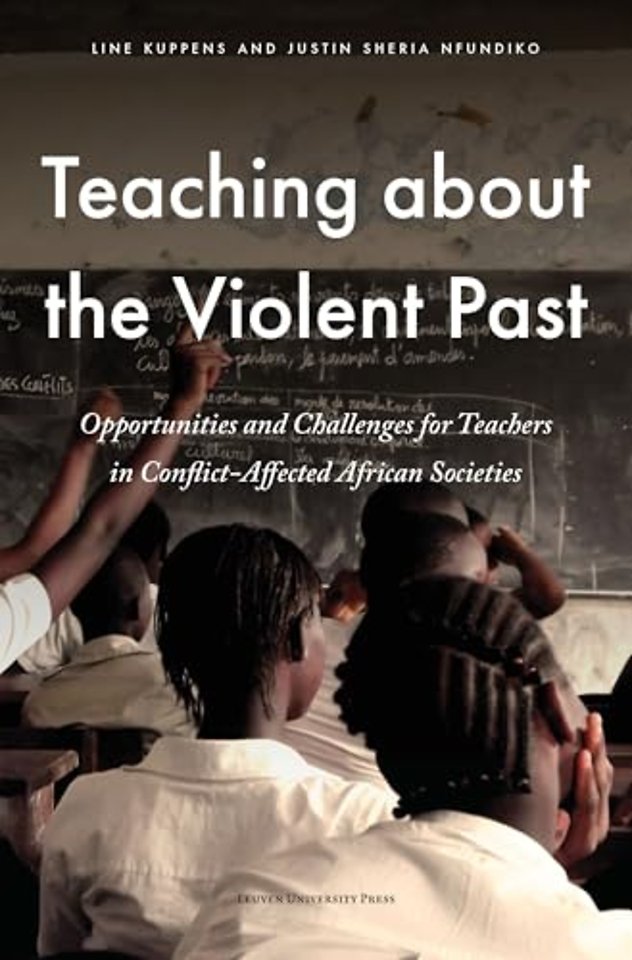
Teaching About the Violent Past
Opportunities and Challenges for Teachers in Conflict-Affected African Societies
Paperback EN 2025 1e druk 9789462704725Levertijd ongeveer 5 werkdagen
Gratis verzonden
Specificaties
ISBN13:9789462704725
Taal:EN
Bindwijze:paperback
Aantal pagina's:220
Uitgever:Leuven University Press
Druk:1
Verschijningsdatum:2-10-2025
Lezersrecensies
Wees de eerste die een lezersrecensie schrijft!
Inhoudsopgave
Preface
List of Abbreviations
Introduction
I.1. Research gaps and objectives
I.2. Case study contexts
I.3. Methodology
I.4. Outline of this book
Part 1. Theory & Concepts
Chapter 1. Reconciliation, memory and (peace) education
1.1. Conflict narratives
1.2. Challenging conflict narratives through transitional justice
1.3. Education as a subject & instrument of transitional justice
1.4. Direct peace education
1.5. Sociological time & societal ‘ripeness’
1.6. Alternatives to direct peace education
1.7. Theory of change of direct peace education
Chapter 2. The risk-taking continuum 2.0
2.1. Curricular-instructional gatekeeping
2.2. The risk-taking continuum
2.3. Limitations of the risk-taking continuum
2.4. Alternative frameworks
2.5. Towards a risk-taking continuum 2.0: the conflict-history education framework
2.6. Using the conflict-history education framework
Part 2. Empirical evidence
Chapter 3. Teaching about ethnic tensions in Kenya
3.1. Ethnic tensions and violence in Kenya
3.2. Education, conflict & peace
3.2.1. Kenya’s education system
3.2.2. Education & conflict
3.2.3. Education & peace
3.3. Survey data
3.4. Support for (in)direct peace education
3.4.1. Support for multicultural education
3.4.2. Support for direct peace education
3.5. (Dis)comfort
3.6. (In)competence: Stereotyping and ethnic favouritism in the classroom
3.6.1. Stereotyping in the classroom
3.6.2. Ethnic favouritism in the classroom
3.7. Situating Kenyan teachers within the framework of conflict-history education
Chapter 4. Teaching about the violent past in Côte d’Ivoire
4.1. Conflict dynamics
4.2. Education, conflict & peace
4.2.1. Côte d’Ivoire’s educational system
4.2.2. Education & conflict
4.2.3. Education & peace
4.3. Survey data
4.4. Support for (in)direct peace education
4.4.1. Support for indirect peace education
4.4.2. Support for direct peace education
4.5. (Dis)comfort
4.6. (In)competence
4.6.1. Focus on competing narratives of conflict
4.6.2. Support for teacher training
4.7. Situating Ivorian teachers within the framework of conflict-history education
Chapter 5. Teaching about ongoing violence in the eastern Democratic Republic of Congo
5.1. Conflict dynamics
5.2. Education, conflict & peace
5.2.1. The Congolese education system
5.2.2. Education & conflict
5.2.3. Education & peace
5.3. Survey data
5.4. Support for (in)direct peace education
5.4.1. Support for indirect peace education
5.4.2. Support for direct peace education
5.5. (Dis)comfort
5.6. (In)competence
5.7. Uprooted
5.7.1. Background on ‘Uprooted’
5.7.2. Fostering critical design experts through ‘Uprooted’
5.8. Situating Congolese teachers within the framework of conflict-history education
Part 3. Conclusions & Policy recommendations
Chapter 6. Main findings and conclusions
6.1. Situating teachers in terms of their support for direct peace education
6.2. Explaining differences
6.3. Teachers’ professional development needs
6.4. Limitations & future research directions
Chapter 7. Promoting critical design experts? Policy recommendations
7.1. Reflections from the field
7.1.1. Kenya: Mary Wanjiru Kang’ethe
7.1.2. Côte d’Ivoire: Louis-Gervais Adomon Anoma
7.2. Policy recommendations
7.3. Teaching strategies
7.3.1. Silent conversations
7.3.2. Exploring the unknown
7.3.3. Forum theatre
Appendix
Notes
References
Index
List of Abbreviations
Introduction
I.1. Research gaps and objectives
I.2. Case study contexts
I.3. Methodology
I.4. Outline of this book
Part 1. Theory & Concepts
Chapter 1. Reconciliation, memory and (peace) education
1.1. Conflict narratives
1.2. Challenging conflict narratives through transitional justice
1.3. Education as a subject & instrument of transitional justice
1.4. Direct peace education
1.5. Sociological time & societal ‘ripeness’
1.6. Alternatives to direct peace education
1.7. Theory of change of direct peace education
Chapter 2. The risk-taking continuum 2.0
2.1. Curricular-instructional gatekeeping
2.2. The risk-taking continuum
2.3. Limitations of the risk-taking continuum
2.4. Alternative frameworks
2.5. Towards a risk-taking continuum 2.0: the conflict-history education framework
2.6. Using the conflict-history education framework
Part 2. Empirical evidence
Chapter 3. Teaching about ethnic tensions in Kenya
3.1. Ethnic tensions and violence in Kenya
3.2. Education, conflict & peace
3.2.1. Kenya’s education system
3.2.2. Education & conflict
3.2.3. Education & peace
3.3. Survey data
3.4. Support for (in)direct peace education
3.4.1. Support for multicultural education
3.4.2. Support for direct peace education
3.5. (Dis)comfort
3.6. (In)competence: Stereotyping and ethnic favouritism in the classroom
3.6.1. Stereotyping in the classroom
3.6.2. Ethnic favouritism in the classroom
3.7. Situating Kenyan teachers within the framework of conflict-history education
Chapter 4. Teaching about the violent past in Côte d’Ivoire
4.1. Conflict dynamics
4.2. Education, conflict & peace
4.2.1. Côte d’Ivoire’s educational system
4.2.2. Education & conflict
4.2.3. Education & peace
4.3. Survey data
4.4. Support for (in)direct peace education
4.4.1. Support for indirect peace education
4.4.2. Support for direct peace education
4.5. (Dis)comfort
4.6. (In)competence
4.6.1. Focus on competing narratives of conflict
4.6.2. Support for teacher training
4.7. Situating Ivorian teachers within the framework of conflict-history education
Chapter 5. Teaching about ongoing violence in the eastern Democratic Republic of Congo
5.1. Conflict dynamics
5.2. Education, conflict & peace
5.2.1. The Congolese education system
5.2.2. Education & conflict
5.2.3. Education & peace
5.3. Survey data
5.4. Support for (in)direct peace education
5.4.1. Support for indirect peace education
5.4.2. Support for direct peace education
5.5. (Dis)comfort
5.6. (In)competence
5.7. Uprooted
5.7.1. Background on ‘Uprooted’
5.7.2. Fostering critical design experts through ‘Uprooted’
5.8. Situating Congolese teachers within the framework of conflict-history education
Part 3. Conclusions & Policy recommendations
Chapter 6. Main findings and conclusions
6.1. Situating teachers in terms of their support for direct peace education
6.2. Explaining differences
6.3. Teachers’ professional development needs
6.4. Limitations & future research directions
Chapter 7. Promoting critical design experts? Policy recommendations
7.1. Reflections from the field
7.1.1. Kenya: Mary Wanjiru Kang’ethe
7.1.2. Côte d’Ivoire: Louis-Gervais Adomon Anoma
7.2. Policy recommendations
7.3. Teaching strategies
7.3.1. Silent conversations
7.3.2. Exploring the unknown
7.3.3. Forum theatre
Appendix
Notes
References
Index




Rubrieken
- advisering
- algemeen management
- coaching en trainen
- communicatie en media
- economie
- financieel management
- inkoop en logistiek
- internet en social media
- it-management / ict
- juridisch
- leiderschap
- marketing
- mens en maatschappij
- non-profit
- ondernemen
- organisatiekunde
- personal finance
- personeelsmanagement
- persoonlijke effectiviteit
- projectmanagement
- psychologie
- reclame en verkoop
- strategisch management
- verandermanagement
- werk en loopbaan