
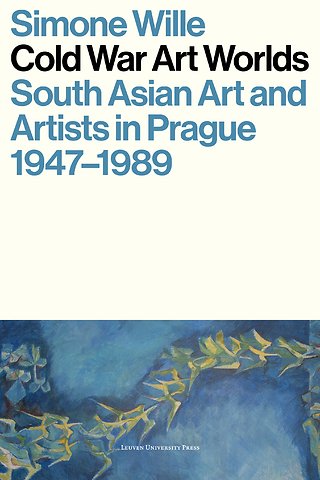
Simone Wille
Cold War Art Worlds
South Asian Art and Artists in Prague, 1947-1989
Paperback EN 2025 1e druk 9789462704701Op voorraad
Vandaag voor 23:00 besteld, donderdag in huis
Gratis verzonden
Specificaties
ISBN13:9789462704701
Taal:EN
Bindwijze:paperback
Aantal pagina's:320
Uitgever:Leuven University Press
Druk:1
Verschijningsdatum:6-11-2025
Hoofdrubriek:Kunst en cultuur
Lezersrecensies
Wees de eerste die een lezersrecensie schrijft!
Inhoudsopgave
Notes on Image Titles and Reproductions
Acknowledgements
Chapter 1. Introduction
1.1 Cold War Art Worlds: South Asian Art and Artists in Prague, 1947–1989
1.2 The Formation of Art Worlds and Artistic Careers through Mobility
1.3 Cold War Art Worlds
1.4 Prague: Co-creating Alternative Art Worlds
1.5 Looking Towards India
1.6 Activating Art History through the Archives
1.7 The Mobility of South Asian Artists and Cold War Art Worlds
Chapter 2. A Pakistani Artist in Prague
2.1 Visualising Transformation at a Crossroads in History
2.2 Shakir Ali: Ideological Affiliations of Artist and Traveller
2.3 Decolonisation and Sites of Production
2.4 Codes of Affiliation
Chapter 3. Exhibiting and Collecting South Asian Art in Prague and Lidice
3.1 Indian Art Exhibitions in Czechoslovakia and an Indian Art Collection in Prague
3.1.1 Mobility across Waters and Divides
3.1.2 Exhibiting India as a Collaborative Effort
3.1.3 Fostering “Indicki-Czech[oslovak] Bhai-Bhai”
3.1.4 Appreciation from the Margins
3.1.5 Mobility across a “Curtain of Lace”
3.1.6 Establishing a Collection of Modern Indian Art in Prague
3.1.7 Curatorial Efforts to Foster Friendship
3.1.8 The 1979 Indian Art Exhibition: Modernist Art at Home in Prague
3.2 A Solidarity Collection in Lidice
3.3 Exhibiting and Collecting South Asian Art in Socialist Central Europe
Chapter 4. Individual Journeys to Prague
4.1 Ram Kumar (1924–2018): Voyaging into Communism
4.1.1 “Displaced Things”: Stranded between Locations
4.1.2 Two-Person Exhibitions
4.2 Maqbool Fida Husain’s Prague Connection: Mobility and Art Worlds
4.2.1 The Perception of the Margin
4.2.2 A Strong Connection with Prague: Intersecting and Co-creating Place
4.2.3 Capturing Prague as a Significant Place
Chapter 5. Chittaprosad’s Immobile Mobility
5.1 A Single Room with a Central Function
5.2 A Single Room as a Stage for a Puppet Theatre
5.3 Exhibiting in Prague
5.4 The Anatomy of a Film about the History and Life of an Artist
5.5 A Symbolic Personal Friendship
Chapter 6. Conclusion
6.1 Indian Art Students in Prague
6.2 Czechoslovak Engagement with India through the Camera Lens
6.2.1 Filmic Documentation about Cultural Exchange
6.2.2 Moderní indickí maliari (1967)
6.3 Final Remarks
Notes
Bibliography
Index
Acknowledgements
Chapter 1. Introduction
1.1 Cold War Art Worlds: South Asian Art and Artists in Prague, 1947–1989
1.2 The Formation of Art Worlds and Artistic Careers through Mobility
1.3 Cold War Art Worlds
1.4 Prague: Co-creating Alternative Art Worlds
1.5 Looking Towards India
1.6 Activating Art History through the Archives
1.7 The Mobility of South Asian Artists and Cold War Art Worlds
Chapter 2. A Pakistani Artist in Prague
2.1 Visualising Transformation at a Crossroads in History
2.2 Shakir Ali: Ideological Affiliations of Artist and Traveller
2.3 Decolonisation and Sites of Production
2.4 Codes of Affiliation
Chapter 3. Exhibiting and Collecting South Asian Art in Prague and Lidice
3.1 Indian Art Exhibitions in Czechoslovakia and an Indian Art Collection in Prague
3.1.1 Mobility across Waters and Divides
3.1.2 Exhibiting India as a Collaborative Effort
3.1.3 Fostering “Indicki-Czech[oslovak] Bhai-Bhai”
3.1.4 Appreciation from the Margins
3.1.5 Mobility across a “Curtain of Lace”
3.1.6 Establishing a Collection of Modern Indian Art in Prague
3.1.7 Curatorial Efforts to Foster Friendship
3.1.8 The 1979 Indian Art Exhibition: Modernist Art at Home in Prague
3.2 A Solidarity Collection in Lidice
3.3 Exhibiting and Collecting South Asian Art in Socialist Central Europe
Chapter 4. Individual Journeys to Prague
4.1 Ram Kumar (1924–2018): Voyaging into Communism
4.1.1 “Displaced Things”: Stranded between Locations
4.1.2 Two-Person Exhibitions
4.2 Maqbool Fida Husain’s Prague Connection: Mobility and Art Worlds
4.2.1 The Perception of the Margin
4.2.2 A Strong Connection with Prague: Intersecting and Co-creating Place
4.2.3 Capturing Prague as a Significant Place
Chapter 5. Chittaprosad’s Immobile Mobility
5.1 A Single Room with a Central Function
5.2 A Single Room as a Stage for a Puppet Theatre
5.3 Exhibiting in Prague
5.4 The Anatomy of a Film about the History and Life of an Artist
5.5 A Symbolic Personal Friendship
Chapter 6. Conclusion
6.1 Indian Art Students in Prague
6.2 Czechoslovak Engagement with India through the Camera Lens
6.2.1 Filmic Documentation about Cultural Exchange
6.2.2 Moderní indickí maliari (1967)
6.3 Final Remarks
Notes
Bibliography
Index
Vaak samen gekocht

€ 74,49
Prijs voor beide
Anderen die dit kochten, kochten ook
-
 Annelies Vanwalleghem€ 34,95
 -
Jesse Bryant Wilder€ 34,99
-
Benjamin Rous€ 45,00
-
Michiel van Kempen€ 39,99
-
Susie Hodge€ 19,95
-
Jacobus de Voragine€ 39,90





Rubrieken
- advisering
- algemeen management
- coaching en trainen
- communicatie en media
- economie
- financieel management
- inkoop en logistiek
- internet en social media
- it-management / ict
- juridisch
- leiderschap
- marketing
- mens en maatschappij
- non-profit
- ondernemen
- organisatiekunde
- personal finance
- personeelsmanagement
- persoonlijke effectiviteit
- projectmanagement
- psychologie
- reclame en verkoop
- strategisch management
- verandermanagement
- werk en loopbaan